7FE Framework Deployment at Ministry of Education, United Arab Emirates

Introduction
Ministry of Education in the United Arab Emirates is a federal entity. It was established in 1972 under the Federal Law No. 1. The government of the UAE dedicated AED 9.8 billion budget to the ministry in 2023. Ahmed Belhoul Al Falasi is the minister responsible for the operations of MOE. Main offices of MOE are located in Dubai, Abu Dhabi, and Ajman. The government of the UAE is paying special attention toward development of the organization to live the dream of Sheikh Zayed bin Sultan Al Nahyan. It has developed numerous exceptional Emirati schools considered as model to provide high quality education to the future students (MOE, 2020). The UAE university, Zayed University, and Higher College of Technology are among best institutions working under the supervision of Ministry of Education (Daher & Salameh, 2022). The ministry is paying special attention towards the advancement of creativity, innovation, and skills of the youth believing they are constructors of the future (UAE Cultural Division, 2023).
This paper is working toward the process of curriculum improvement by the MOE.
In order to execute organizational strategy in an effective way, business leaders establishing an appropriate environment with high level guidelines (Chan & Owusu, 2022). The alignment must need to achieve from top to bottom starting from business strategy, to operational model of business, leading toward business capabilities. Business capabilities based on people, technology, and processes. People means organizational structure, their roles and responsibilities, reward structure, and human resource policies (Siddique et al., 2023). Technology component of organizational strategy is depending on business operational model (Seo & Jung, 2021) while process means process as an asset, process architecture framework, process groups and models, high level value chains, list of end-to-end business processes, and benefit management framework (González Moyano et al., 2022).
Perception of business process management (BPM) varies according to nature of business or industry it is performing in (Compagnucci et al., 2022). However, it can be viewed in four main aspects;
Program management office: as per project management office (PMO) project management is critical therefore focus must be paid on finishing projects within budget and on timely completion. It also determined the methodology approach that will suit all projects (Frame, 2020).
Line of business managers: as per this aspect people are responsible for driving differentiation (Stein Dani et al., 2019). Therefore, its needed to hire the best and brightest and to train them to improve their skills. They should be motivated and must be fairly compensated (Frame, 2020).
IT organization: technology upgradation is important for creating competitive differentiation (Siddique et al., 2023). Therefore, it is needed to plan, develop, and maintain relative technology (Frame, 2020).
Process office: It also represents a competitive differentiation and paying attention about ways to complete the work regardless of how the work is being done (González Moyano et al., 2022). It is guiding the people and technology to execute the process, view process, and not being biased are some other tasks to be performed.
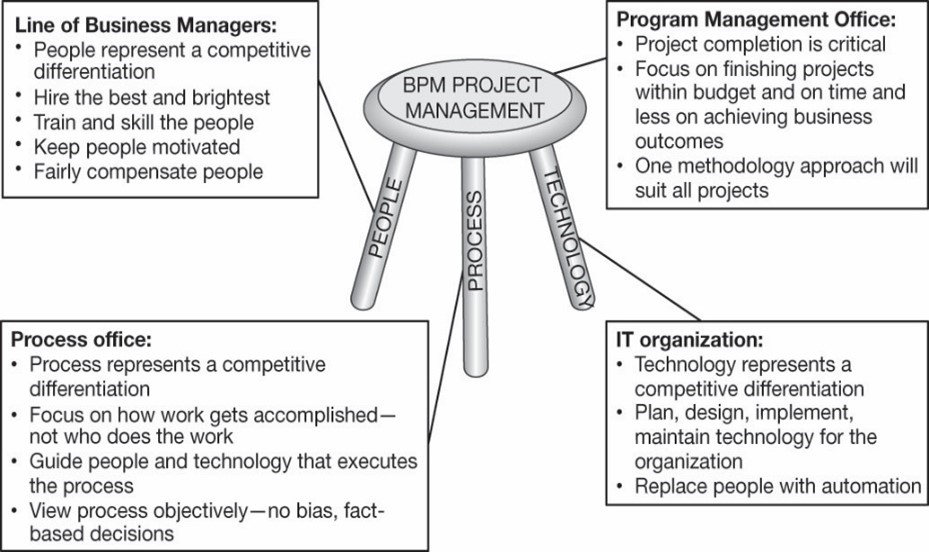
Figure 1: Art of Business Project Management; Source: (Brouder et al., 2020)
A BPM project executed without keeping proper eye on the four components can make a project collapse.
7FE Framework implementation stages
The 7FE framework is a tool to implement Business Process Management. It is comprised on ten stages. Ten stages of 7FE are divided into four functions or phases known as foundation phase, finding and solution phase, fulfilment phase, and future phase (Mahmoodzadeh & Jalalinia, 2019). Three enablers for these four phases include leadership, project management, and people change management. This is the reason that this framework named as 7FE means four phases starting with F and four Enablers. However, each of the phase gets further divided into sub-functions, for instance, foundation phase divided into foundation, enablement, and launch pad. Finding and solution phase gets divided into understand and innovate, fulfilment phase gets divided into people, develop, and implement, while future phase into value realization and sustainability. The first enabler of leadership is driving the path to achieve goal of implementing BPM, project management enabler managing the project team and techniques to smoothen the operations, and people change management will monitor the people and change occurred for the success of the BPM (Hoffman et al., 2013).
As mentioned, the foundation phase comprising on foundation, enablement, and fulfilment. This section will discuss each of these phases in terms of Ministry of Education (MOE).
Foundation stage
The stage for process management will be set in this phase as it will determine the basis of the organization including its vision, mission, and values.
Vision: to offer innovative education for a knowledge, pioneering, and global society
Mission: to create an innovative education system to fulfil the demands of labour market, to ensure high quality education, and to deliver excellent services for all age groups.
Values: following are business values for Ministry of Education
o To strengthen the sense of nationalism by promoting social responsibility
o Fostering human values, for instance, peace, moderation, tolerance, and and voluntary engagement along with upholding of Islam.
o To emphasize on fostering professionalism and transparency of services
o Encourage community partnership and accountability toward promotion of equality and justice.
o To ensure equal access to educational opportunities
o Development of a society based on principles of innovation, technology, and advancement.
(MOE, 2020)
MOE Corporate strategy development
Following are the features of updated corporate strategy of MOE;
o To have strategic leadership help in determining educational reforms by developing a roadmap for achieving excellence in all perspectives.
o To get actively engage with major stakeholders, for instance, students, their parents, educational institutes, community organizations, and government entities.
o To develop advanced policies to promote relevance, inclusivity, and educational quality.
o Wise deployment of resources to maintain high educational infrastructure.
o Develop a quality assurance framework
o Encourage research and innovation by increasing collaboration between research institutes, industry, and academia.
o To seek international collaboration to exchange benchmarks and best practices.
To implement the strategy, a top-down approach will be used where Minister of education will serve as senior most management personnel while other members of senior management will serve as leaders to drive 7FE framework.
Middle management level staff at MOE such as finance controllers, under secretory, secretary for each emirate will play their role in project management and will be considered second essential of 7FE. The third essential of people change management will be academic institutes, their staff, students, and general public having requirements to deal with MOE.
Here, it is important to mention that output of these phases will be serve as input for the next phase of 7FE.
This phase referring to develop some detailed elements with an aim to provide support by enabling business capabilities to improve successful delivery of all components of the BPM strategy (Israwati & Legowo, 2022). Here, main elements of BPM implementation will be discussed such as models, guidelines, principles, rules, and architectures.
MOE’s Value Chain
To drive value chain for MOE, its needed to develop SMART goals for the organization (Ricciotti, 2019);
Policy formulation: to develop educational policies and strategies along with plans to enhance education system in the UAE. In this regard, there is need to develop framework for curriculum, assessment methods, educational standards, and teaching methodologies.
Curriculum development: to develop curriculum for numerous education stages starting from pre-schooling to secondary level.
Licensing and accreditation: The ministry must prepare rules and regulations in granting licenses to educational institutes and to make it sure that basic standards must be met.
Teacher Training and Development: The ministry must strive to develop training programs for teachers and other educational professionals so that they stayed updated with latest skills required in educational environment.
Assessment of Students and evaluation: The ministry must need to develop student assessment programs, for instance, national tests and examinations.
Educational Research: educational research must be promoted to generate evidence-based practices and knowledge.
Educational Technology Integration: to integrate technology into education system for improving teaching and learning experience.
Special education and inclusion: The ministry must need to develop inclusion programs
International cooperation: The ministry must need to collaborate with international organizations of other countries along with educational institutes to exchange knowledge and experience and to share best practices.
Business Process Model
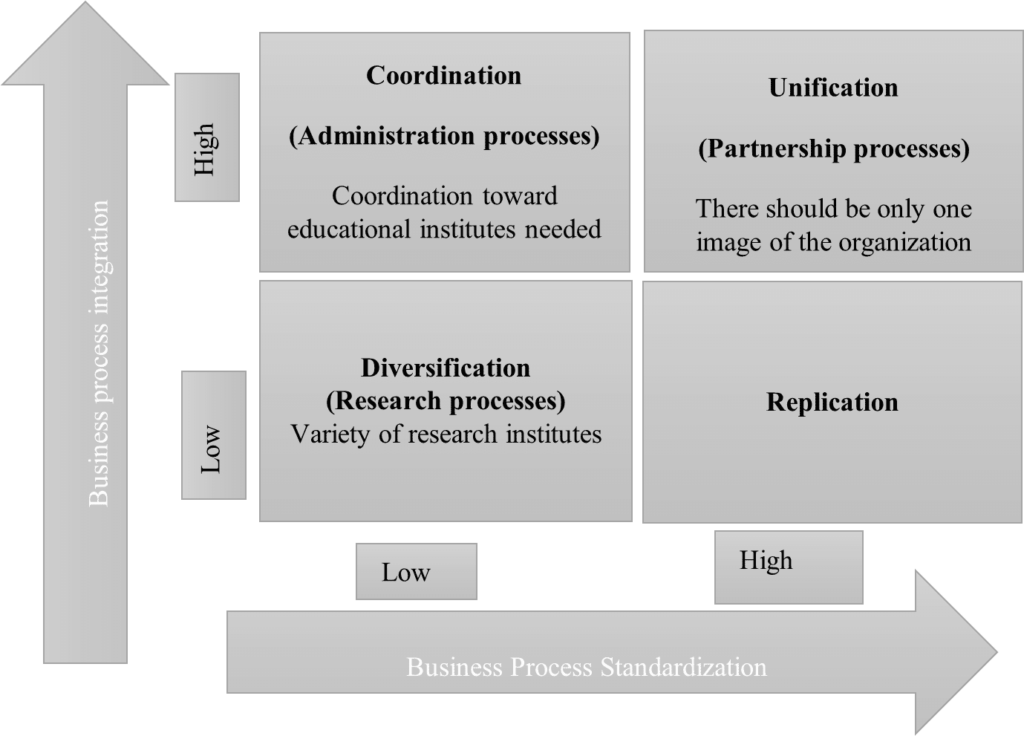
Figure 2: Business Process Model; source- researcher contribution |
Launch pad is the third stage of 7FE framework, where business model which developed needed to deploy. Launch Pad phase is having further three stages identification of stakeholders, outcome from workshop, and developing risk and mitigation table. Below is the explanation of each stage in terms of MOE.
Stakeholder identification
A workshop will be conducted with stakeholders to have a high-level view of potential outcome of MOE. Following stakeholders will be requested to attend the workshop.
- Minister of Education: Dr. Ahmed Belhoul Al Falasi
- Program Director: Sultan Al Dhaheri
- Director: Sameera Al Hosani
- Lead Teacher: Saleh Dar Khalil
- Head of curriculum development department: Zachary Smith
- Assessment Specialist: Tate Nanje
- Senior Education Professional: Kaylan Anderson
- Subject Matter Expert: Karl Radlein
(Signal Hire, 2023)
Outcomes from the workshop
The workshop which will be conducted by calling above 8 officials from MOE is expected to result in following or similar outcomes.
- List of internal stakeholders
- Engagement level of each stakeholder, for instance:
- Minister of Education will be interested in overall performance improvement of the organization along with director and program director.
- Lead teacher will be interested in enhancing the performance of teachers within the UAE
- Head of curriculum development department will be interested to update curriculum according to world standards.
- Assessment specialist will deploy innovative ways to assess students and teachers across the region.
- Senior education professional will work toward enhancing the performance of overall education profession.
- Subject Matter Expert will work on enhancing the worth of each subject so that students can get maximum from their studies.
Risk and Mitigation Table
|
Launch Pad Phase: Risk and mitigation table |
|
|
Potential risks |
Mitigation strategies |
|
Wrong identification of stakeholders |
Stakeholders must be identified with careful planning |
|
Head of division lack expertise |
Each head of division must provide related training and knowledge programs |
|
Project scope is not yet defined |
The project aims to improve overall performance of MOE |
|
Lack of funding |
To conduct fundraising programs and exhibitions |
|
Improper handover of new settings |
|
This phase is having two stages; understand and innovate. These two stages are explained in terms of Ministry of Eduation (MOE) in this section.
This stage will discuss root causes of current issues and will detemine certain metrics to get detailed infomration to draw some innovations (Seo & Jung, 2021). The first input will be taken by completing process model, then high level metrics will be detailed, people capability matrix will be established, and finally quick wins will be determined.
Process model
Process model will comprise on determining the communication ways, revalidation of scope, and understanding the workshop.
Communication
This phase is about sharing as much information about the project as possible with stakeholders (Szkudlarek et al., 2020) and people that will be involved in the project in any way including employees, suppliers, associate organizations, universities, and others.
Revalidate Scope
Until now, the documentation work was in process but time has come to implement the planning. Therefore, it is needed to revisit the scope to check if its needed to revalidate in the context of new inforamtion, strategies, and policies (Lahajnar & Rozanec, 2016). The ministry of education is already performing well and its scope is quite aligned with its mission therefore its not needed to revalidate anything.
Understanding phase
It is very important to brief executives about proceedings and changing situations so that they can understand the current situation. Looking at the unimportance, sometimes, executives tend to skip this phase but it may land organization into worst situations (Israwati & Legowo, 2022).
High level metrics preparation
Process level, management level, and people capability matrix will be discussed.
Process level
Process level metrics is organizing the various parts of the project in hierarchy manner knowing which part should deliver first (Israwati & Legowo, 2022).
Management Level
This stage will be used to assess the performance of management and for the said purpose numerous feedback options will be used, for instance, surveys, interviews, and meetings (Lahajnar & Rozanec, 2016). Feedback will be collected by the users of MOE such as students, parents, institutes, teachers, and others. They will be asked about the efficiency and behavior of management personnel they ever encountered with. The outcome of the feedback will determine the improvement areas. Moreover, some highlights will be registered such as top performer institutes, students, teachers, and similarly other staff in their field.
People capability matrix
|
Capabilities / key processes |
Ability to improve performance of MOE institutes |
Communication skills |
Curriculum development |
Quality of education |
|
Notifications |
Recommended |
Recommended |
Desired |
Desired |
|
Assessment |
Recommended |
Recommended |
Desired |
Desired |
|
Approval |
Recommended |
Mandatory |
Desired |
Desired |
|
Payment |
Approval |
Recommended |
Mandatory |
Recommended |
|
Finalization |
Approval |
Recommended |
Mandatory |
Mandatory |
Quick Wins
Following points determined as quick wins throughout the BPM process.
o To let people, understand the processes and purpose
o Assign projects related to stakeholders
o Development of current metrics and processes
This is one of the most critical stages of BPM due to their sensitivity. In this stage, there is need to generate innovative ideas and final solution of related issues will be determined. Therefore, innovation phase is also called a challenging phase because it revolves around creativity and excitement. This phase is responsible to create things in advance way. Innovate phase will comprise on automation, attendees of innovation workshop, BPM goals, technologies, and workshop activities.
This phase is requiring to add automation at each step during the interaction with MOE and even for its internal processes (Lahajnar & Rozanec, 2016). For example, automatically attendance recording and recording the hours a person was active in his job. Automatically receiving inquiries and sending them to appropriate department for handling.
Attendees of Innovate Workshop
Stakeholders which required to attend the innovative workshop are following;
o Minister of Education
o Minister of Education: Dr. Ahmed Belhoul Al Falasi
o Program Director: Sultan Al Dhaheri
o Director: Sameera Al Hosani
o Lead Teacher: Saleh Dar Khalil
o Head of curriculum development department: Zachary Smith
o Assessment Specialist: Tate Nanje
o Senior Education Professional: Kaylan Anderson
o Subject Matter Expert: Karl Radlein
o Head of each department
o Representatives of affiliated institutes
In this stage, goals of the BPM are determined, the meeting of innovation will also help in finalizing the goals of BPM, for instance, which service or process required to redesign. In addition, the time to complete each phase is being discussed.
Following are process goals;
o To improve the quality of curriculum according to international standards
o To train teachers according to new requirements
o To develop policies to foster new change
o Preparing the students for future
Following technologies will be deployed in MOE to increase its performance;
Cloud computing
It is an expensive way to bring efficiency in performance and scaling up the services. Moreover, it will provide 24X7 services to its customers, will add to data security, and will lower the chances of cyber-attacks.
Outsourcing
Arrangement of outsourcing of certain services, especially expertise in the field of education, curriculum expert to revisit curriculum, and auditors.
Shared services
By deploying Enterprise Resource Planning (ERP) all departments and related institutes must be connected to add transparency. Moreover, centralizing system will enable to share resources and will add to efficiency.
BPM System
There is need to deploy all of the nine enablers of BPM
Robotics Process Automation
Intelligent robots can be deployed to answer online queries, to process applications, and to provide auto update.
Activities which will be performed during the workshop for generation of innovation ideas are mentioned below;
o Brainstorm exercise will help to develop free flowing ideas
o Role Play exercises will put participant into certain situation to analyze and realize
o Magic Wand exercises will be used for elimination and identification of problems
o End State exercises will help the participants to pay attention toward end and mention the expected end of processes.
o Demonstrations will help in opening minds toward new possibilities.
This phase comprising on people, develop, and implement stages:
People phase as its name reflects is more related to people, their roles, and responsibilities. People will be assigned their duties in this stage after analyzing their capabilities. Therefore, organization structure will also get designed. In essence, this stage is working toward finding the right people for the right job. Assigned people must be motivated enough to more productive.
Cultural activity and BPM Approach
|
BPM initiation approach |
Type of BPM Activity |
||
|
Large scale program |
Portfolio of project |
Isolated BPM project |
|
|
Strategy lead |
Critical |
Significant |
Moderate |
|
Business lead |
Critical |
Significant |
Moderate |
|
Process lead |
Critical |
Critical |
Moderate |
Key roles at MOE for updating the curriculum
o Policy development for new curriculum
o Scanning the international education environment
o Realizing the future needs of students
o Working closely with experts of the field and headmasters of schools
o Coordinating with expert teachers, education specialist, psychologist, and IT personnel
o Having liaison with directors and high authorities
o Develop links between institutes
o Extending support about new curriculum
Required Training
Following trainings are required by the members of the team;
o Analysis based training will help to generate analysis skills
o Members must require training to analyze media so that they can decode media activities
o There must be an arrangement about just-in-time training that is when a training rightly needed
o In each department, their few representatives must be trained enough to train rest of the members
o It is appropriate to provide training through real time environment for better understanding of trainers.
This is the development phase and hence automation will be added as a development process along with other development methodologies. Other tasks of this phase are correlated with communication and these are BPM components, BPM approach, updating functional and technical specifications.
IT components / KPIs
Below is the list of KPIs
o It is required to highlight the difference between existing curriculum and updated curriculum
o Analytics and research findings will be used to understand requirements of students in near future
o Work management must be measured
o The whole system must be integrated along with document integration
o Outcome of robotics deployment must be measured
o Process design must highlight differences
Approach for development
There are numerous development approaches but agile development approach will be used because it is more flexible and user oriented. First demonstration could be made quickly; therefore, reservations can be fixed. Iteration process will help improve the shortcomings.
The actual happening of the process will start from this phase and people will have their new roles to perform, new technology will be in place. In addtion, Enterprise Resource Planning will start working, along with Activity Based Management, Automation, and Robotics.
Implementation of proposed improvement
To implement improvements following steps will be taken;
o Updating of implementation plan understanding any changes that required
o It will be ensured that communication is flawless and transparent
o Management involvement will be ensured
o Users testing about mechanisms will be ensured
o Staff will be provided with required training
o Marketing strategies will be launched to introduce new changes
o Pilot programs will be run to test the new performance
o Deliverables will be updated
o Contengency plan, back out plan, and develop rollout plans will be arranged
o It will be ensured that people would not go to old processes in anyway
o Trainers will be arranged to mentor staff
o BPM team required to handover the system to actual management
o System and processes will be monitored and imporvements will be adjusted
o Feedback will be collected from all stakeholders such as educational institutes and other affiliates.
Communication with stakeholders
Stakeholders must be updated about the detailed information resulted from implementation phase. In case of MOE, the stakeholders that needed to update include educational institutes, affiliated institutes, international associations, students, and their parents.
Risk and mitigation technique
New IT staff need to hire to keep pace with new technological deployments.
Future phase of 7FE framework comprising on value realization and sustainable performance.
This phase is aiming to count on steps involved in value realization and to deliver the benefits of BPM process.
Value realization Steps
The costs of the project will be lowered in this phase because implementation is already done which is highly expensive phase. The results of the BPM however will be recorded in variety of ways and for the said reason, there is need to prepare a benefit register. In case of MOE, students and parents seems happy with new curriculum improvement, their satisfaction level toward availing MOE services must be increased, institutions and organizations must be more satisfied and confident in performing their services. Overall quality of education must be improved.
There must be a separate register to record value of each stage, for instance, benefit register for enable phase, benefit register for launch pad phase, benefit milestone network for innovate phase, benefit delivery matrix for fulfillment phase.
Benefit summary table
|
Benefit summary table |
||||||
|
Benefit description |
Benefit owner |
Benefit amount |
Expected benefit realization date |
Dependencies |
Risks |
|
|
Start |
End |
|||||
|
Transparency |
Management |
Pre-implementation |
Post implementation |
ERP system |
Incapability of IT department |
|
|
Satisfaction level increased |
Stakeholders |
Pre-implementation |
Post implementation |
Marketing |
Poor management |
|
|
curriculum worth increase |
Stakeholders |
|||||
A project cannot be called successful until it will reflect future sustainability. To reflect future sustainability, it needed to perform following steps:
o Evaluation of results such as mechanism to deliver new curriculum, continuous improvement, and BPM focused sustainability.
o New processes must be evaluated in comparison of old methods
o If any improvement identified it needed to implement without delay
o Performance management must be embedded in business
o Process governance must institutionalize in following ways;
o Continuous measurement
o Leadership must be divided to supervise different processes, for instance, faculty head must supervise relevant department while there must be some appointments to look after other issues.
o Deployment of top to bottom culture
o Encouragement of desired behavior
o Limit controls
o Make it simple
Following are recommendations to improve the BPM process further;
o Though described 7FE framework to implement Business Project Management at the Ministry of Education is quite comprehensive. Still, fostering a continuous improvement culture is essential before initiating the process. In this regard, it is critical to instil a mindset among stakeholders and employees to encourage them to seek better ways to do tasks, identify inefficiencies, and deploy changes for process optimization.
o MOE must stay at the forefront of technological advancement by embracing and deploying updated technological solutions to enhance data analysis, automate repetitive tasks, lead toward informed decision-making, and streamline operations.
o To ensure the competitiveness of the Ministry’s workforce, continuous professional development is inevitable. Therefore, employees must be provided regular training and skill-building opportunities to enable them to contribute efficiently toward their respective roles by acquiring related knowledge and expertise.
o In pursuit of improvement, collaboration with stakeholders holds a paramount role. Hereafter, arranging engagement activities among students, parents, teachers, and other associates is essential to gain valuable feedback. By understanding the needs and requirements of these stakeholders, the Ministry of Education can tailor its processes to serve the education community in the best possible way. Moreover, MOE must involve stakeholders in decision-making to encourage a sense of ownership and shared responsibility by leading toward a greater target and acceptance of change implementation.
In conclusion, the Ministry of Education in the UAE has decided to improve the curriculum through business process management deploying the 7FE framework. The Ministry aims to provide high-quality education by focusing on continuous improvement as Sheikh Zayed bin Sultan Al Nahyan envisioned. 7FE framework suggests focusing on technology deployment, enhancing collaboration with stakeholders, and deploying professional development to achieve the target. Ten steps of the 7FE framework guide the MOE at each step of the BPM, such as foundations, are set by describing the organization’s vision, mission, and values. In the next step, current processes elaborate for understanding and identification, innovative ideas are generated to find solutions to problems, and the implementation and evaluation exercises are performed.
Top-to-bottom involvement of MOE is required to ensure alignment, such as starting from corporate strategy toward business and operational systems. However, processes, technology, and people must stay central focus in the alignment progression. The capabilities of people must be harnessed to achieve effective and efficient education management. It is suggested to incorporate share services and automation along with outsourcing certain services to meet the changing requirement of the Ministry of Education. Agile development methodology is recommended to develop the framework so that flexibility can prevail and solutions stay customer-focused. The commitment of the Ministry is highlighted in delivering tangible benefits and long-term viability during value realization and sustainable performance stages. It is expected that by implementing the 7FE framework and utilizing its spirit of continuous improvement, the MOE is well-positioned to reach its vision of providing innovative and world-class quality education to youth by preparing them as builders of the future.
Brouder, S. M., Volenec, J. J., & Murrell, T. S. (2020). The Potassium Cycle and Its Relationship to Recommendation Development. Improving Potassium Recommendations for Agricultural Crops, 1–46. https://doi.org/10.1007/978-3-030-59197-7_1
Chan, A. P. C., & Owusu, E. K. (2022). Evolution of Electronic Procurement: Contemporary Review of Adoption and Implementation Strategies. Buildings, 12(2), 198. https://doi.org/10.3390/buildings12020198
Compagnucci, I., Corradini, F., Fornari, F., Polini, A., Re, B., & Tiezzi, F. (2022). A systematic literature review on IoT-aware business process modeling views, requirements and notations. Software and Systems Modeling. https://doi.org/10.1007/s10270-022-01049-2
Daher, W., & Salameh, H. (2022). The Role of a Ministry of Education in Addressing Distance Education during Emergency Education. European Journal of Investigation in Health, Psychology and Education, 12(5), 478–493. https://doi.org/10.3390/ejihpe12050036
Frame, J. D. (2020). Reconstructing Project Management. Project Management Journal, 45(1), e2–e2.
González Moyano, C., Pufahl, L., Weber, I., & Mendling, J. (2022). Uses of business process modeling in agile software development projects. Information and Software Technology, 152, 107028. https://doi.org/10.1016/j.infsof.2022.107028
Hoffman, B. M., Lukoyanov, D., Dean, D. R., & Seefeldt, L. C. (2013). Nitrogenase: A Draft Mechanism. Accounts of Chemical Research, 46(2), 587–595. https://doi.org/10.1021/ar300267m
Israwati, Y., & Legowo, N. (2022). Using The 7 FE Framework In Business Process Management To Support Successful IT Project Management In Digital Banking.
Lahajnar, S., & Rozanec, A. (2016). The evaluation framework for business process management methodologies.
Mahmoodzadeh, E., & Jalalinia, Sh. (2019). A business process outsourcing framework based on business process management and knowledge management. Business Process Management Journal, 15(6), 845–864. https://doi.org/10.1108/14637150911003748
MOE. (2020). The Official Website of the Ministry of Education. Moe.gov.ae. https://www.moe.gov.ae/En/Pages/Home.aspx
Ricciotti, F. (2019). From value chain to value network: a systematic literature review. Management Review Quarterly, 70. https://doi.org/10.1007/s11301-019-00164-7
Seo, I., & Jung, W. (2021). Testing the effectiveness of competitive value model organizational culture factors on organizational performance. Korean Public Administration Review, 55(1), 121–160. https://doi.org/10.18333/kpar.55.1.121
Siddique, M., Manzoor Sanjrani, & Rani, K. (2023). Green technology for water scarcity: An entrepreneurial business may bring transformation in water management practices. https://doi.org/10.1002/ird.2832
Signal Hire. (2023). List of Ministry of Education – UAE employees. https://www.signalhire.com/companies/ministry-of-education-dubai-uae/employees
Stein Dani, V., Dal Sasso Freitas, C. M., & Thom, L. H. (2019). Ten years of visualization of business process models: A systematic literature review. Computer Standards & Interfaces, 66, 103347. https://doi.org/10.1016/j.csi.2019.04.006
Szkudlarek, B., Osland, J. S., Nardon, L., & Zander, L. (2020). Communication and culture in international business – Moving the field forward. Journal of World Business, 55(6), 101126. sciencedirect. https://doi.org/10.1016/j.jwb.2020.101126
UAE Cultural Division. (2023). United Arab Emirates Cultural Division | Ministry of Education (MOE). Www.uaecd.org. http://www.uaecd.org/ministry-education-moe