Evolution of Photography in the social media Era and its Impact on Self-Image
Prologue
In the past three decades, we have witnessed a technological revolution primarily connecting human experiences worldwide. Almost two-thirds (5.3 billion) of the world’s population currently have internet access. The pandemic has given a significant push by connecting 800 million people. Amongst these, 5.04 billion actively engage on social media platforms such as Facebook, YouTube, Twitter, Instagram, and TikTok. Consequently, the influx of unfiltered information is constant and immediate, significantly impacting global engagement with distant dramatic events. For example, since the October 7 attack by Hamas, activists have risen, leveraging social media to spotlight the suffering in Palestine under Israel’s rule, showcasing ordinary individuals shaping history for peace and justice. This heightened connectivity and accessibility to information have the potential to influence war events.
Video Source: (Al Jazeera 2024)
Traditional to Digital Battlefields
The transition from traditional to digital battlefields demonstrates a profound shift, such as conflict driven by technological advancement and communication. In history, war was limited to borders. Still, the scope of engagement has expanded, turning it into digital battlefields, including social media platforms, cyber-attacks, disinformation campaigns, and psychological operations conducted through digital channels. Therefore, the difference between military and civilian domains blurs in the manner the lines between war and peace increasingly indistinct. In the context of the Gaza War, social media activists and journalists are countering state propaganda by sharing shocking images of suffering in Palestine directly to smartphones. Such efforts amplified through social media are challenging the dominant political narrative and stirring global outrage against Hamas, the Israeli government, and its allies. However, including social media demands the redefinition of war, challenging conventional notions of power, sovereignty, and security in the 21st century.
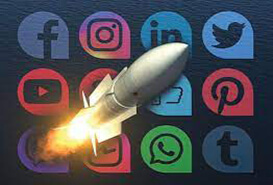
Figure 1: Source – (AFCEA 2019)
Viral Content and hashtag activism
The phenomenon of viral content and the trend of hashtag activism has emerged as a force with the potential to reshape narratives, mobilize support, and influence policy decisions. In the battlegrounds of social media, information, images, and videos spread exponentially, undermining traditional media’s geographical boundaries and filters. In recent warfare incidents such as Russia vs. Ukraine and Gaza vs. Israel, viral content and hashtags have played a critical role in shaping public discourse and spurring solidarity movements, consequently amplifying the suppressed voices and turning them into impactful violence. The hashtags like #UkraineWar, #GazaUnderAttack, and #FreePalestine serve not only as symbols of solidarity but also as rallying calls for global attention and action. Utilizing the power of virality, individuals and groups of civilians can leverage social media to challenge dominant narratives by advocating for humanitarian interventions and holding violent actors accountable.
Nevertheless, virality and hashtag trends also present challenges, primarily misinformation and manipulation. Moreover, various actors’ co-opting of hashtags turns realities into ambiguous information, complicating conflict resolution efforts.
Figure 3: Source – (Palestine Chronicles 2023)
Citizen journalism
The rise of social media introduces the notion of citizen journalism, which has become a critical component of information dissemination and offers alternative perspectives that challenge official narratives. The ubiquity of smartphones and easy access to social media platforms turned ordinary citizens into frontline reporters documenting the realities of war in real time and sharing their experiences with the world. Eyewitness reporting serves as a direct window into the human cost of conflict, showcasing the devastation of airstrikes, the plight of civilians caught in the crossfire, and the resilience of communities. Citizen journalists counterbalance mainstream media coverage, precisely content subject to censorship or bias. They provide an unfiltered, grassroots perspective that resonates with audiences worldwide. For instance, Israel’s propaganda marked by contradictions, such as the World Health Organization’s rejection of its evacuation claim for Al Ahli Hospital and Human Rights Watch’s report of white phosphorus bomb use against Palestinian hospitals, underline the Israeli government’s disregard for human life highlighting how social media has exposed and amplified such abuse to a global audience.
On the other hand, the proliferation of citizen journalism raises questions about authenticity, verification, and the potential for manipulation and propaganda. Citizen journalism enriched our understanding of the Gaza conflict but underscored the need for critical media literacy and responsible reporting practices in the digital age.
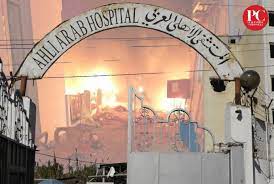
Figure 4: Source – (Palestine Chronicles 2023)
Psychological warfare
Psychological Operations evolved from World War I but became increasingly sophisticated, encompassing tactics such as fake news and disinformation campaigns. In modern times, psychological war has surpassed traditional boundaries as it finds new avenues to influence and manipulate through social media platforms. State and non-state actors harness social media’s power to wage campaigns to shape perceptions, attitudes, and behaviors by witnessing unprecedented access to global audiences. The carefully crafted narratives, imagery, and messaging target civilians’ and opponents’ hearts and minds. These tactics exploit vulnerabilities, instill fear, and undermine morals.
In the context of Gaza, social media turned into a battleground where competing narratives strive to dominate, and each side employs tactics ranging from propaganda and disinformation to emotional appeals and psychological manipulation. The borderless social media amplifies the reach by snowballing the impact of such campaigns; consequently, everyday life merges with war. Therefore, it is necessary to understand psychological warfare in the digital era to navigate the complexities of modern conflict and safeguard against manipulation and coercion in the digital world.
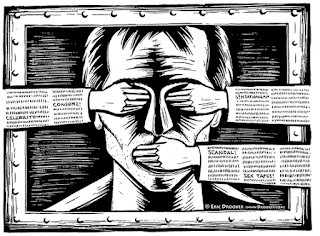
Figure 5: Source – (Marinelli 2018)
Gaza and Social Media
Gaza and Israel’s war is the latest where social media is actively playing its part. Palestinians are the city journalists documenting the war events on social media for the world. Ilan Pappe refutes any uncertainty regarding the systematic and harsh expulsion of Palestinians from their native land in his book “The Ethnic Cleansing of Palestine.” Since international journalists and media are restricted in Gaza, millions of people in the world are witnessing the war through the eyes of Palestinians as they are sharing ground realities. By sharing updates on platforms like X, Instagram, and TikTok, citizens are humanizing the conflict. In response, their audience is forming deep emotional bonds with them. A sports journalist, Leyla Hamed, from London, and a filmmaker, Kanwal Ahmed, from Toronto, express a deep emotional connection to Palestinian content creators as they follow some on social media platforms. People believe that the immediacy of the content shared by Palestinians offers a perspective lacking in traditional media. Some famous Palestinian citizen journalists turned war celebrities include Bisan Owda, Motaz Azaiza, and Hind Khoudary, as they provide firsthand accounts from their communities amid communication blackouts.
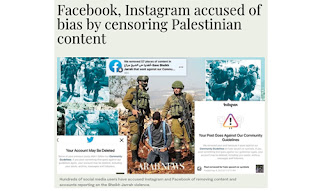
Figure 6: Source – (Minevich 2020)
Ethical responsibility
Social media platforms have played a credible role in modern wars, such as the Ukraine invasion and the Gaza conflict, but they also raise questions about ethical responsibility and regulatory considerations.
Platforms like Facebook, Twitter, Instagram, and TikTok serve as platforms for information dissemination. Public discourse holds the power to shape narratives and perceptions of conflict. However, such influence creates an ethical dilemma by raising questions about the responsibility of platforms to prevent the spread of misinformation, hate speech, and incitement to violence. The power of algorithms to prioritize certain content and amplify engagement poses risks for further polarization among communities by exacerbating tensions in conflict zones. These challenges underline the need for regulations to oversee social media platforms and measure and promote transparency, accountability, and adherence to ethical standards. The regulatory authorities must take responsibility for balancing the imperative of free speech to mitigate harm.

Figure 7: Source – (Minevich 2020)
The Bottom Line
There is no doubt that the digital age revolutionized warfare by transforming traditional battlefields into complicated scenarios with the help of social media platforms, specifically in the context of citizen journalism, psychological warfare, and misinformation campaigns. The Gaza conflict is an example of the thoughtful impact of digital dynamics, where social media has become a critical tool for documenting realities and mobilizing support. Nevertheless, alongside its potential for positive change, social media creates challenges of misinformation, manipulation, and ethical dilemmas.
Way Forward
It is essential to implement comprehensive strategies to address multifaceted challenges posed by the digitalization of warfare, including bolstering efforts to combat misinformation and propaganda through robust fact-checking mechanisms. Promoting media literacy and critical thinking skills among users for enhanced transparency and accountability measures on social media platforms becomes vital. Moreover, there is a need for greater regulation and oversight to ensure ethical standards are upheld, such as restrictions on hate speech, incitement to violence, and algorithmic biases.